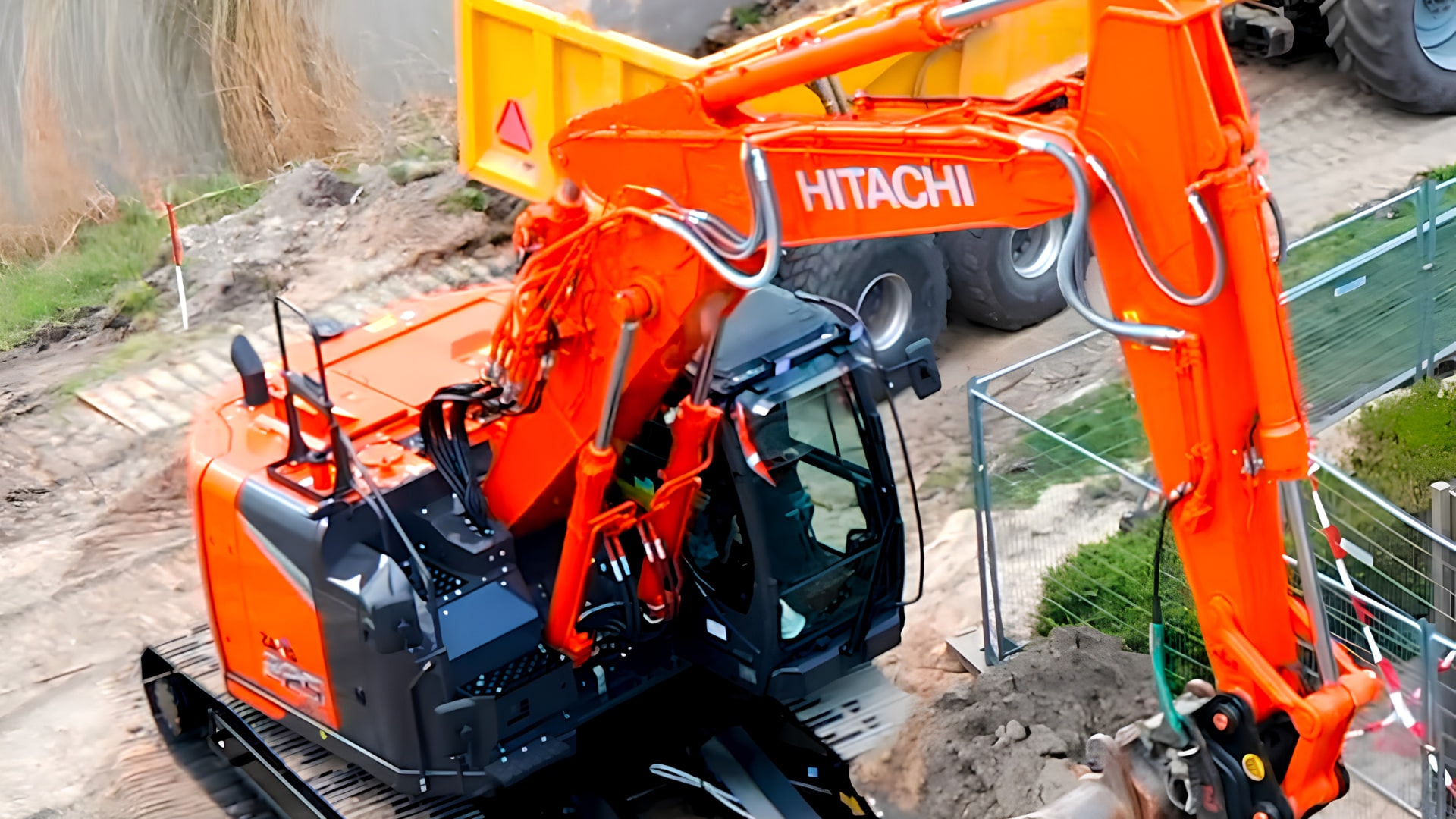
The short answer: You can usually replace a truck or machine before its finance ends. The existing loan generally has to be paid out as part of the deal, so the two numbers that matter are the payout figure (what it takes to close the loan on a given date) and what the machine is realistically worth. If it's worth more than you owe, you have equity that can go towards the next one. If you owe more than it's worth, that shortfall has to be covered somehow, and how you cover it changes what the replacement really costs.
This guide explains how payouts, balloons and equity work in plain terms. It isn't about whether to replace, which Repair or Replace? covers. It's about what the finance on the old machine means for the new one.
What is a payout figure?
A payout figure is the amount your current financier needs to close the loan on a specific date. You request it from the financier, usually in writing, and it is normally valid only until a stated date.
It is often not the same as the balance you'd estimate from your statements. Depending on the contract, a payout figure can include:
The remaining principal (the amount still borrowed)
Interest to the payout date
Any balloon or residual amount still to come
Fees or charges for ending the contract early, if your contract has them
Check your contract, and ask the financier to itemise the figure. Early payout terms vary a lot between contracts and lenders.
Equity and negative equity
Compare the payout figure with what the machine would realistically fetch, either as a trade-in or in a private sale.
| What it means | What it does to the replacement | |
|---|---|---|
| Equity: worth more than you owe | After paying out the loan, there's money left | The surplus can act as a deposit, reducing what you borrow |
| Break-even: worth about what you owe | The sale clears the loan and little more | The replacement is financed largely on its own |
| Negative equity: owe more than it's worth | Selling doesn't fully clear the loan | The shortfall has to come from cash, or in some cases be added to the new finance |
An illustrative example
Round numbers to show the method. Not a real deal or a quote.
An operator's excavator has a payout figure of $85,000. Comparable machines are selling for about $110,000, so there's roughly $25,000 of equity. The replacement costs $240,000. If the full $25,000 goes in as a deposit, about $215,000 needs to be financed.
Change one number. If the payout were $120,000 and the machine fetched $110,000, there'd be a $10,000 shortfall. Covering it from cash means there's less cash for everything else. Adding it to the new loan, where a lender allows that, means borrowing about $250,000 for a $240,000 machine.
Rolling negative equity into new finance: the trade-offs
Some lenders will, in some circumstances, allow a shortfall on the old machine to be included in the new finance. It can make a replacement possible when cash is tight. It also has costs:
You borrow more than the new machine is worth. You start the new loan already behind, which can make the next replacement harder.
You pay interest on the old machine's debt for longer.
Lenders may limit how much they'll finance relative to the machine's value, so it isn't always available, and the shortfall may affect the structure offered.
That isn't a reason never to do it. A shortfall on an unreliable machine can be cheaper to absorb than the downtime of keeping it. But it should be a deliberate choice, compared against paying the shortfall in cash or waiting until the loan balance comes down. This is where September's warning about overstretching applies to replacement decisions as much as growth.
When the balloon is coming due
If your current finance has a balloon (a lump sum due at the end of the term), the run-up to that date is a natural point to decide what happens next. The common options are:
| Option | When it can make sense | Watch for |
|---|---|---|
| Pay the balloon and keep the machine | It's reliable, paid-off ownership suits the business, and cash is available | Using cash you need for working capital |
| Refinance the balloon | You want to keep the machine but spread the lump sum | Refinancing an older machine over a new term; total cost |
| Sell or trade, and use the proceeds | The machine's value covers the balloon and you want to upgrade | The realistic value against the payout |
| Replace and include any shortfall | The old machine is costing more than it's worth to keep | Starting the new loan behind |
Start this decision a few months before the balloon falls due, not in the final weeks. The basics of how balloons work are in Managing Cashflow: How to Structure Business and Equipment Loans Around the Way Your Business Earns.
Does it matter whether it's a chattel mortgage or a lease?
Yes. Under a chattel mortgage, you borrow to own the item, and the lender takes security over it. Under a lease, a leasing company owns the equipment and you rent it. Under hire purchase, you own it once the debt is paid. Ending each one early works differently, and the right steps depend on your specific contract. TMF's Chattel Mortgage vs Equipment Lease page explains the differences. Check the end-of-term or early-termination clauses in your own contract.
Getting the order right
The order of steps in a replacement with finance owing matters:
Request an itemised payout figure, valid to a date, from your current financier.
Get a realistic value: a written trade-in offer or recent comparable sales.
Work out your equity or shortfall.
Price the replacement and test repayments with the Repayment Calculator using that equity or shortfall.
If you already have a finance quote for the replacement or a refinance, sense-check it with the Rate Check Calculator, especially if it was issued before 30 September 2026. On 29 September the Reserve Bank decided to lift the cash rate target to 4.60%, effective 30 September, and lenders may have repriced since.
Arrange the new finance so that the payout, sale or trade, and new purchase settle in a sensible sequence. Your broker can coordinate this.
If the payout figure expires before settlement, get it updated.
Frequently asked questions
Can I trade in a truck or machine that still has finance owing?
Usually, yes. The existing finance is generally paid out from the trade-in value as part of the deal. If the trade-in is worth more than the payout, the difference can go towards the new machine. If it's worth less, the shortfall has to be covered.
How do I get a payout figure on my equipment loan?
Ask your current financier for a written payout figure, valid to a specific date. Ask for it to be itemised (principal, interest, any balloon, any early-termination fees) so you can see what you're paying.
What is negative equity on equipment finance?
It means you owe more on the machine than it's realistically worth. If you sell or trade it, the proceeds won't fully clear the loan, and the difference has to come from cash or, where a lender allows it, be included in new finance.
Is it a good idea to roll negative equity into a new loan?
It depends. It can make a needed replacement possible, but you borrow more than the new machine is worth and pay interest on the old debt for longer. Compare it with paying the shortfall in cash or waiting, and look at what the old machine is costing you in the meantime.
My balloon is due next year. What should I do now?
Start planning now. Get a payout figure and a realistic value, decide whether you want to keep, refinance or replace the machine, and test the options. Leaving it to the last few weeks narrows your choices.
Related TMF reading and tools
Repair or Replace? How to Decide When an Ageing Truck or Machine Keeps Costing You
Managing Cashflow: How to Structure Business and Equipment Loans Around the Way Your Business Earns
Servicing a Loan: How to Test Whether Repayments Fit the Way Your Business Earns
Got a payout figure and a machine in mind? Get Fast Answers from TMF on how the numbers might fit together.
About TMF: Transport & Machinery Finance (TMF) is an Australian equipment finance broker for trucks, trailers, machinery and other commercial equipment.
Important note: General information only. Not personal financial, tax, legal or accounting advice. Payout amounts, early termination terms and whether a shortfall can be refinanced depend on your contract and on lender assessment. Calculator results are indicative only.