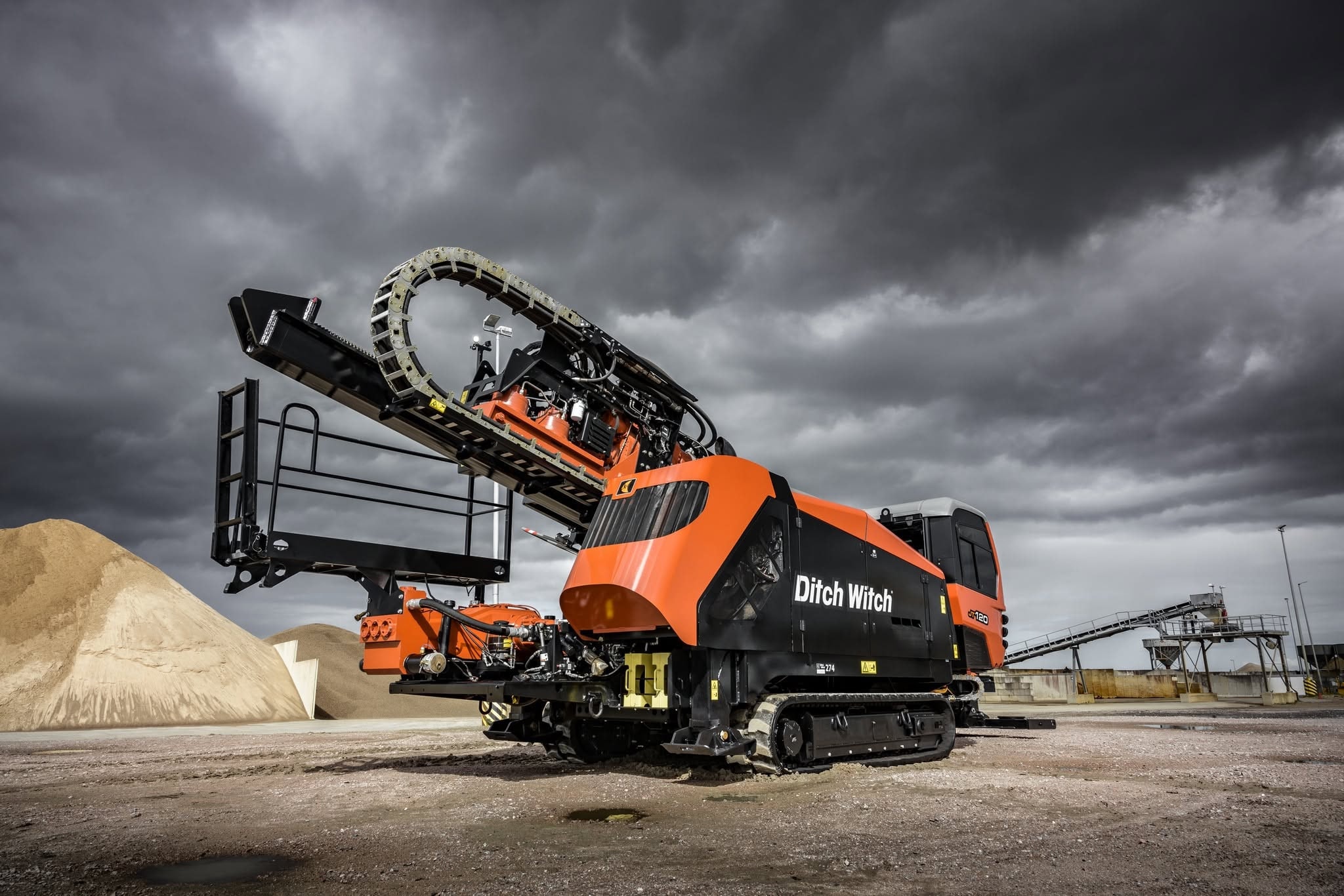
When labour is tight, a breakdown costs more than the repair invoice.
It can stop an operator, idle a crew, delay another machine and place a client commitment under pressure. If the person with the right ticket or site knowledge is available but the machine is not, that labour cannot be recovered by working harder later.
Jobs and Skills Australia found that the proportion of Machinery Operators and Drivers occupations in shortage rose to 28 per cent in 2025. That does not mean technology replaces people. It means the available people and equipment need to work together with less avoidable friction.
Reliable machinery helps contractors do more with the labour they already have by protecting working hours, reducing repeated tasks and making output more consistent.
In this article
- Reliability is a productivity measure
- Why reliability matters across August's project environments
- Technology can make available labour more consistent
- The true cost of downtime
- Repair, replace or change the role?
- Reliability questions to ask before finance
- Protect uptime without overcapitalising
- Finance structure should support the reliability plan
- Frequently asked questions
Reliability is a productivity measure
Reliability is often discussed as maintenance. Commercially, it is an output measure.
| Reliability issue | Direct effect | Wider effect |
|---|---|---|
| Unplanned breakdown | Lost machine hours and repair cost | Idle operator, disrupted crew and delayed delivery. |
| Repeated minor faults | Stop-start production | Lower operator confidence and inconsistent cycle time. |
| Parts delay | Extended downtime | Replacement hire, rescheduling and client pressure. |
| Inaccurate or worn equipment | Slower work or failed tolerance | Rework, extra passes and wasted material. |
| Poor service visibility | Maintenance occurs reactively | Higher risk of failure during peak utilisation. |
The machine that breaks down may not be the only asset losing money. If a compactor, grader, loader or haul unit controls the next stage of work, several other resources may wait behind it.
Why reliability matters across August's project environments
Tiaro Bypass
An 8.5-kilometre four-lane bypass with major formation and interchange work will depend on staged earthworks and consistent site flow. A weak support machine can slow the production fleet around it.
Fraser Coast Hybrid
Large-scale solar and battery construction needs materials and components delivered across broad work fronts. Material-handling downtime can leave installation crews waiting.
Melbourne Airport Rail Stage 1
Confined rail and utilities work may take place within limited access windows. Equipment failure during a possession or staged work window can be more costly than the same failure on an open site.
Tonkin Highway Corridor
Road formation and compaction need consistency. A machine that cannot maintain target quality or dependable service can create extra passes and rework.
Technology can make available labour more consistent
The strongest productivity technology does not simply add screens to the cab. It reduces decisions, inputs or repeat work that do not add value.
- Grade assist can help maintain a design or slope with fewer manual corrections.
- Compaction measurement can show when target density has been reached, reducing unnecessary passes.
- Telematics can identify idle time, service requirements, machine health and utilisation patterns.
- Cameras and improved visibility can reduce slow manoeuvring and support safer operation.
- Working modes and attachment settings can help match hydraulic output to the task.
- Remote diagnostics can reduce the time needed to identify a fault and prepare the right repair.
These features still need trained operators and suitable site systems. Technology should be assessed on the measurable friction it removes.
The true cost of downtime
Repair spend is only one part of downtime cost. A practical calculation can include:
- Lost machine income or output.
- Operator and crew time that cannot be redeployed.
- Replacement hire and transport.
- Overtime or additional shifts needed to recover the program.
- Client deductions, missed work or reputational damage where applicable.
- Additional service, towing or emergency parts cost.
TMF's Downtime Cost Calculator annualises repair and maintenance spend and adds estimated income lost while the machine is off the job. It then gives an indicative comparison with the replacement value that the same annual cost may support. It is a starting point, not an approval or quote.
Repair, replace or change the role?
Not every unreliable machine should be replaced. The right decision depends on the pattern.
Repair
Repair may make sense when the fault is isolated, the machine otherwise fits the work, parts are available and the remaining earning life is strong.
Replace
Replacement becomes more credible when downtime is recurring, repair cost is rising, the machine is constraining contract delivery or newer capability materially improves output.
Rebuild or refurbish
For some heavy assets, a planned rebuild may protect useful life and reduce the disruption of replacement. Compare cost, warranty, downtime and likely resale.
Redeploy
An older machine may no longer suit front-line production but may still serve lower-intensity work. This only helps if the new role has real use and does not hide an underutilised asset.
Hire during peak demand
Hire can protect capacity where demand is temporary or uncertain. Compare availability, transport, rate, specification and loss of control over timing.
Reliability questions to ask before finance
- Which machine failures have caused the most lost work in the last 12 months?
- What did those failures cost beyond the repair invoice?
- Is the replacement machine supported in the regions where it will work?
- What are the service intervals and which items are configuration-dependent?
- Can telematics or remote diagnostics reduce response time?
- Are parts, attachments and trained operators available?
- Will the new asset remove a genuine bottleneck or only shift it elsewhere?
- Does the finance term fit the expected reliable earning period?
Protect uptime without overcapitalising
Reliability does not require every asset to be new. A well-inspected used machine with the right history, support and price may be commercially stronger than a new machine with uncertain utilisation. Equally, a cheap used asset can be expensive if downtime and repair exposure are ignored.
The aim is not to eliminate all breakdown risk. It is to prevent predictable weak links from controlling the output of the business.
For smaller operators, that may mean replacing the one machine that stops revenue when it fails. For larger fleets, it may mean analysing service and telematics data to prioritise assets where downtime has the greatest flow-on effect.
Finance structure should support the reliability plan
When replacing equipment, compare the new repayment with the full annual cost of keeping the old machine: repairs, lost income, replacement hire and disruption.
Also protect working capital. A deposit that empties the operating account can create a different form of reliability risk if the business lacks cash for wages, fuel, service and mobilisation.
The stronger structure supports both the asset and the operation around it.
Final thought
In a labour-constrained market, available hours are valuable. Reliable equipment helps contractors turn more of those hours into finished work.
If one weak machine is costing productive days, use TMF's Downtime Cost Calculator and review the replacement numbers before the next failure makes the decision urgent.
Frequently asked questions
How should contractors calculate downtime cost?
Add repairs and maintenance to estimated lost income, idle labour, replacement hire, transport and recovery costs. Use consistent records rather than relying only on memory.
Does newer equipment guarantee less downtime?
No. Reliability depends on application, maintenance, support, operator practice and configuration. Newer equipment may offer warranty, monitoring and service benefits, but the full operating case still needs review.
Can telematics improve productivity?
It can help identify idle time, service needs, fault codes, location and utilisation. The value comes from acting on the data.
Should the repair bill or repayment be compared directly?
Not on its own. Compare the full annual cost of keeping the machine with the full cost and expected benefit of replacement.
Related TMF reading
- TMF August Industry Update: Why Productivity Is Becoming the Real Contractor Advantage
- TMF Downtime Cost Calculator
- TMF Repayment Calculator
General information only
This article provides general information only, not personal financial, tax or legal advice. Finance approval, rates, terms and structures depend on lender assessment, business circumstances, asset details and supporting documentation.